At the Confluence of Angst and Flow
This post has been blocked for too long—blocked by my own mind and ability to alter it. Like many, angst, fear, worry, grief, and even shock have been pervasive. This, coupled with a heavy dose of self-doubt, has been paralyzing of late. Here I am, living in abundance, held by the loving attentiveness and care of my beloved, in the comfort and beauty of my home, and surrounded by circles of beauty, kindness, sunshine, and supportive energy. What’s there not to like? Why is this not the epitome of an environment ripe with creativity? Isn’t this the perfect time for flow and connection with the Divine Flow?
Instead, the abundance and blessing of my life in its current habitat have been besieged (by my own inner circuitry) by messages about who and what I am not. The incessant drone of what I “should” be doing: earning, serving, providing, solving, contributing. And as my mochin d’katanut (small-mindedness) persists in narrowing my compassion, creativity, and light, my physicality has followed suit—pain in my back and buttocks, stiffness in my knees and fingers, contraction and tension responding to and conspiring with the stuck-ness of my mind and heart. These physical and emotional connections remind me of the passages we read in Sh’mot/Exodus and again at our Passover seders about the hardening of Pharaoh’s heart and the suffering that ripples outward from Pharaoh as a result of his own hardening and narrowness. Each day’s news reminds me of Pharaoh and all of the pharaohs, kings, rulers, and officials whose power leads them to a hardening of heart and narrowing of vision. Is my own behavior in some way a reflection of this? How can I make a difference? Where is my role?
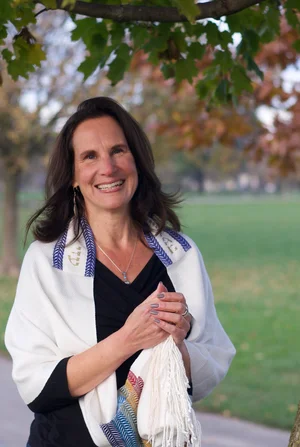
I am a rabbi, and I am aching to work in my field. At 60, many people in my demographic are retiring. However, I have no interest in retirement. I listened to my calling later in life and am just on the threshold of stepping into a second decade of rabbinic service. I have so much to offer and am heavy with unshared spiritual nourishment. Although the occasional barista fantasy comes over me each time I am at one of the many fabulous and locally owned and operated coffee and tea shops around St. Pete, I am deeply committed to my rabbinistry. For ten months, I have relied on a narrative that, in following my husband to a new location for his important and meaningful work, I needed to take time to learn how my calling would coalesce with meaningful paid work for me. My patience is wearing thin as I search.
And as I am so eager for rabbinic work, there is a sad irony illuminated in conversations, private clergy chat groups, and articles. Jewish clergy are working with extensive angst and pain. Spiritual leaders serving congregations across the United States are navigating angry congregants and board politics from within and alienation from outside their communities. They are expected to say “the right thing” to communities with disparate views, not to mention varying definitions of highly charged words, in 24/7 news cycles, rising nationalism, conflicting narratives, and antisemitism from both the right and the left. We spend so much of our time these days navigating the weaponization of antisemitism against the progressive spaces most of us used to inhabit comfortably and real Jew-hatred coming at us from conservative, white, Christian nationalist agendas and terrorists of every stripe. We respond regularly to antisemitic tropes used by those who cannot distinguish between the Israeli government and the state of Israel, or between Israel (the country) and Jews (a diverse peoplehood).
For years, we have been enmeshed in the constant tension raised by Israel being front and center in the news. Since October 7, 2023, most of our progressive friends and colleagues beyond the Jewish community have been judging us (American Jews) harshly unless we denounce Israel. Their inability to appreciate that we have been supporting our Israeli friends who have long been fighting against the increasing hard-line, right-wing, ultra-religious zealots in their country continues to leave me gobsmacked. How can people who have been politically active social-justice warriors within our divisive and polarizing experience of the past ten years in the United States be unable (or unwilling) to make a distinction between a right-wing government and the population of a nation or the validity of that country as a nation-state? And why are we placed in the position of answering these questions when most American Jews, like other Americans, are not Israeli, do not have dual citizenship, have limited knowledge of Israeli politics and history, and are wrestling with our own concerns and frustrations about the Israeli government and the war? Requiring Jews to pass some litmus test to be legitimate allies in seeking justice concerning American political issues is a form of antisemitism. *
And despite the harshness of the climate, both within the larger world and in the microcosm of the Jewish community, there is a great joy that comes from service as a spiritual leader. When serving as a holder of sacred space, there are no words to describe the exquisitely radiant moments when the Flow (Shefa) is abundant. These unparalleled moments and quieter, more mundane ones are a great privilege to hold. So, I will continue to resist the urge to work in a bookstore or a coffee shop, unless doing so as the rabbi in residence. I will not return in some fashion to my career in secular law. I will continue to search for the place or places where my calling is fulfilled and my services are valued. And in the meantime, I will study and write and, please God, stay open to the Divine Flow and my own sacred flow.
*A rabbi was told that if she didn’t denounce Israel, she had no right to speak out against immigrant detention.