
Why I Became a Rabbi
As a rabbi, my work aligns fully with my values and flows from the very essence of my being. I have always been drawn to serving people, and, as a young adult, I chose law school as the vehicle for that work. I enjoy using language to bring people together across difference and grow creative dialogue. My Jewish identity had always been central to my life, and though I continued to grow my knowledge and skills as part of Jewish community, my engagement was circumscribed by work and personal responsibilities. It was with great joy and a bit of holy chutzpah that I chose to turn my passions toward committed rabbinic study in my forties.
I received s’micha (conferral of rabbinic status) in 2018 following eight years of seminary study within Jewish Renewal, a pan-denominational movement. This work allows me to draw on all facets of my being. My rabbinate is enhanced by my decades of lived Jewish experience, learning, and leadership across denominations as well as my personal journey and professional work as an attorney, mediator, community builder, and spiritual leader.
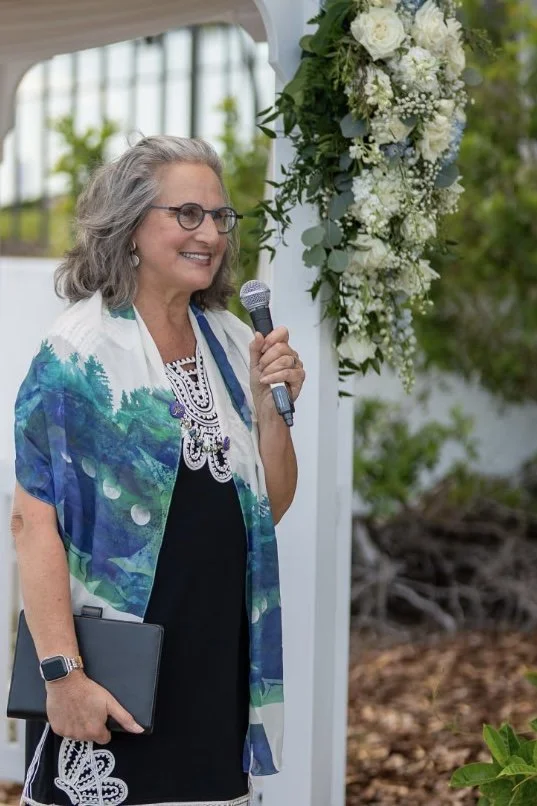
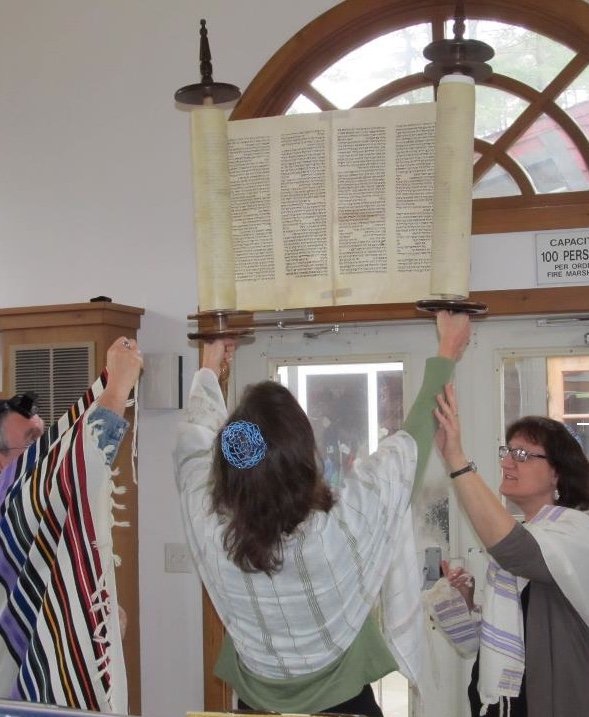
Education & Professional Formation
My path to the rabbinate was shaped by scholarly training and lived experience, leadership, and learning.
B.A. in Philosophy and Politics, Brandeis University
J.D. from The Ohio State University College of Law
Attorney, mediator, and facilitator of conflict transformation
Founding spiritual leader and homegrown rabbi of Kehilat Sukkat Shalom in Columbus, Ohio
Davenen Leadership Training Institute (DLTI)
Ordination (s’micha) through the ALEPH Ordination Program
Board Member, OHALAH Association of Rabbis, Cantors & Rabbinic Chaplains for Jewish Renewal
While embracing my calling as a spiritual leader and guide, my legal and mediation background and decades of community organizing continue to inform my capacity to navigate complexity, facilitate difficult conversations, and hold space with clarity and compassion.
What Guides My Rabbinic Engagement
My “rabbinistry” is shaped by a personal philosophy and spiritual sensibilities that include:
Seeing Judaism as ever-evolving and tradition-rooted, deeply anchored in ancient wisdom and responsive to changing needs and narratives of contemporary life.
Honoring Judaism’s capacity to hold the sacred tension of multiple truths and perspectives. Encouraging curiosity and compassion as our primary approaches to disagreement honors the dignity and divinity in each human and offers a path of growth and a place for harmony and balance to guide our interactions.
Living expansive inclusion means warmly welcoming mixed-heritage families, Jewish-adjacent loved ones, and Jews who “Jew” differently without judgment or barriers.
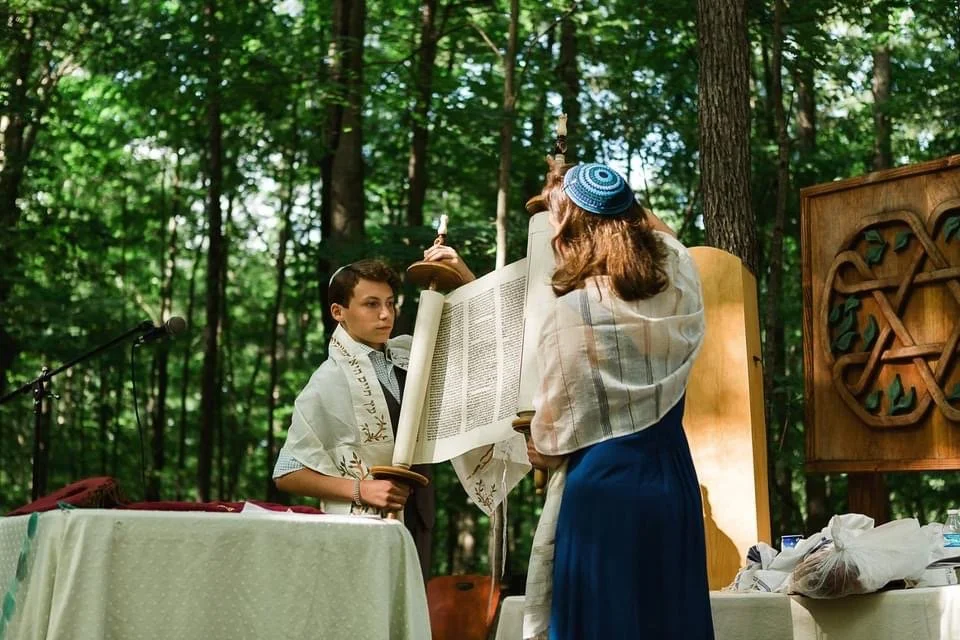
Growing eco-Jewish practices and opportunities to soak in sacred time offer avenues to reconnect with our agrarian roots, lunar rhythms, and seasonal patterns of Jewish holy days. An earth-based awareness fuels and animates ancient and modern spiritual creativity, gratitude, and mindfulness.
Appreciating the power of ritual as a transformative container where thoughtfully crafted experiences can enhance emotion, cultivate hope, and deepen connection and memory.
Emphasizing embodied spiritual practice to accompany intellectual pursuits. Honoring the vessel that carries us through this world as wholly part of our experience of Jewish learning, prayer, and expression provides an integrative and more expansive approach of mind-body-spirit from which to engage with Jewish wisdom and practices.
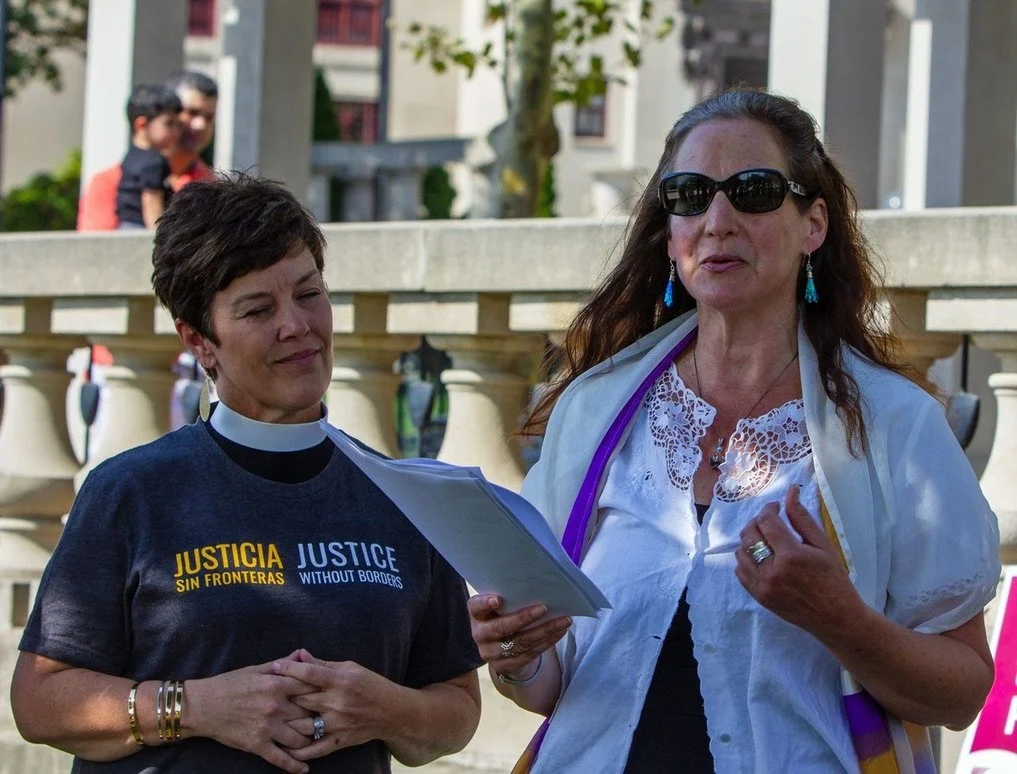
Engaging in doing Jewish (rather than simply being Jewish) includes active pursuit of justice. The ancient values of Torah speak to the issues of modernity in prophetic ways and can be valuable tools in the public square. Religion isn’t “owned” by one political party or position and can be an avenue to valuable dialogue across the generations and across a spectrum of belief systems.
My Spiritual Journey & Life’s Work
Early Love of Liturgy & Big Tent Judaism
I was seven years old when the first woman rabbi in North America was ordained within Judaism’s Reform movement. Jewish family life, congregational community, and summers at Jewish camp awakened in me a deep love of liturgy and melody. Even as a child, I imagined becoming a rabbi or cantor.
During college, however, I experienced something new and painful: judgment within Jewish spaces about levels of observance. Being told I was “not Jewish enough” challenged my young understanding of Judaism as a wide and welcoming tent. That experience planted a lifelong commitment to cultivating Jewish spaces that honor diversity of practice and perspective.
Law, Mediation & the Art of Sacred Conversation
Before entering rabbinical school, I practiced law and worked as a mediator and facilitator of conflict transformation. I helped individuals and institutions navigate systemic and interpersonal disputes using collaborative approaches.
This work sharpened my skills in deep listening, careful language, and honoring divergent views. It also strengthened my belief that disagreement, when engaged with integrity, can be sacred work. These tools now serve me daily as a rabbi guiding families, communities, and interfaith couples through emotionally complex moments.
Community Building & Rabbinic Calling
Though I stepped back from formal Jewish involvement during parts of early adulthood, my love of Jewish learning never faded. A personal experiment designing a monthly Rosh Chodesh ritual rekindled my connection to liturgy and sacred time.
In 2006, I helped found The Little Minyan, a grassroots havurah (group of friends) that grew into Kehilat Sukkat Shalom, a vibrant Jewish community located in central Ohio. We built a participatory, egalitarian collective rooted in meaningful engagement rather than passive attendance. In 2009, we affiliated with the Reconstructionist movement because its vision of Judaism as evolving, justice-seeking, and intellectually rigorous resonated deeply. The kehilah later affiliated with Jewish Renewal in gratitude for the nutrients being received through my studies within its cantorial and rabbinic tracks.
After intensive leadership training through the Davenen Leadership Training Institute, I finally trusted the rabbinic calling that had quietly accompanied me for decades. I entered the ALEPH Ordination Program and received s’micha on January 7, 2018 (20 Tevet 5778). The children of our community had already begun calling me “Rabbi Jessica” long before ordination; the title was born in relationship. My role as a founder and the spiritual leader of Sukkat Shalom over 15 years was integral to my journey before and throughout rabbinical school. We learned together what it meant to build and sustain Jewish community in the early years of the 21st century. Helping give birth to this community and nurturing it into its fullness remains a great honor and source of pride.
The Heart of My Rabbinistry
At the center of my work is an exuberance for:
Judaism’s agrarian roots and cycles of sacred time
Rigorous study across generations and millennia
The music and poetry of Jewish prayer
Spiritual practices for everyday living
The sacred tension of differing ideas
The diversity of Jewish expression across the globe
I am honored to work with Jews who feel ambivalent about their connection to Judaism and with Jewish-adjacent loved ones seeking meaningful entry points. Jewish wisdom belongs not only to institutions but also to the hearts and homes of those who find nourishment in it.
Interfaith/Multi-heritage Relationships & Families
A significant focus of my work involves interfaith and multicultural relationships. I delight in helping couples and families honor both particularity and universality—creating sacred space that reflects shared values and diverse spiritual inheritances. I often remind folks that all marriages (even where both people share a religious heritage) are “interfaith.” I bristle at the term “non-Jew” to describe a Jewish-adjacent partner. Since biblical times, Jews have been intermarried, and we have been a mixed multitude since receiving Torah at Har (Mount) Sinai.
Whether or not a beloved partner chooses to formally convert, Jewish ritual and wisdom offer tools for meaning-making, memory, celebration, and resilience. My work is to make these tools accessible in a thoughtful way that demonstrates deep respect for each person’s background and narrative.
Eco-Judaism & Torah in the Public Square
My love of hiking, camping, walking barefoot, gardening, local fresh produce, cooking, and healthy eating informs how I engage with the world around me. My education and passions have led me to the practice of eco-Judaism, which includes an emphasis on food justice. Jewish law and values offer profound insight into sustainability, environmental ethics, and planetary balance.
I enjoy helping individuals connect their environmental commitments with daily Jewish practice—from mindful food choices to sacred rhythms of creativity and rest. These teachings also cultivate fertile ground for collaboration across faith traditions and secular activism and repair work.
Personal Grounding
Although I cherish being called “rabbi,” my favorite title remains “Mom.” Parenting, caregiving for my parents during prolonged illness, and tending a blended family have shaped my understanding of compassion, fortitude, forgiveness, and self-care.
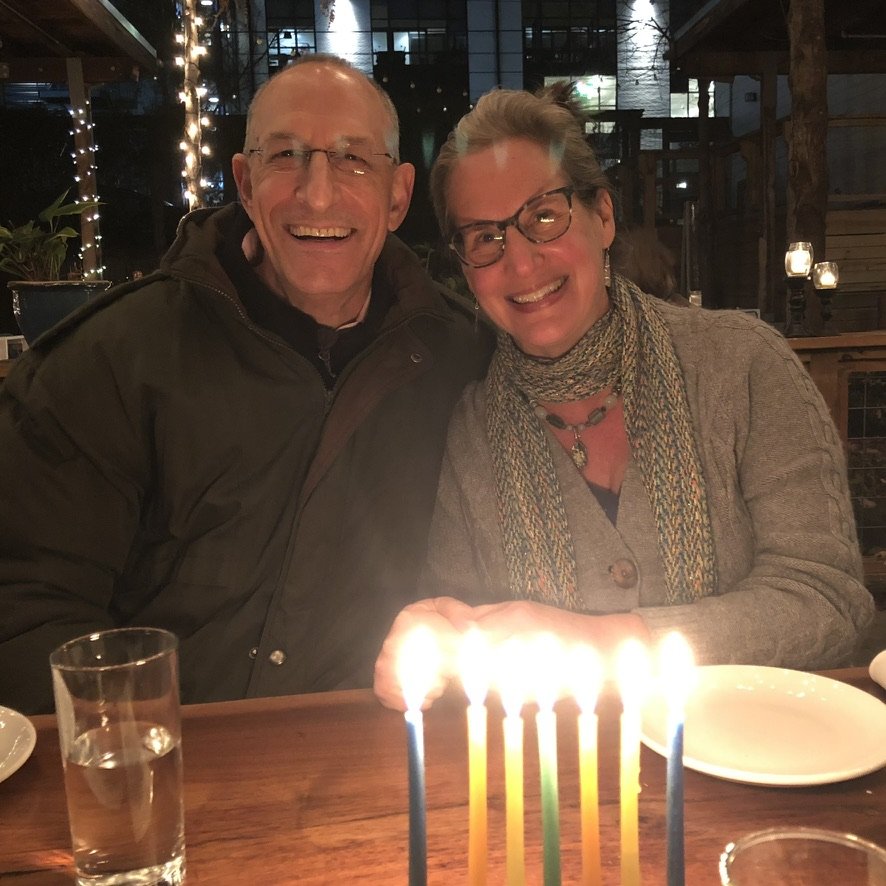
In 2020, at the beginning of the global pandemic, I married my beloved husband and b'sheret (soulmate), Eric Stillman. Our wedding, shared virtually with hundreds while only seven stood physically present, reflected the resilience and creativity that ritual can offer in uncertain times. During that season, I began braiding 100% natural beeswax Havdalah candles to ensure that my Havdalah practice utilizes ritual objects that reflect my values. This creative expression of fashioning a braided candle with natural materials and the warmth of the sun was cathartic, and it led to a small Etsy business I called Havdalah Happiness. It connected me with hundreds of wonderful people who used my candles as they marked the sacred transition to a new week or even to a new status, as my havdalah candles have been included in several weddings, including our own!
During the pandemic, an important friendship connected me with a small and fabulous community in, of all places, northwestern Montana. I had the privilege of serving as spiritual leader of the Glacier Jewish Community in Whitefish and Kalispell until Eric and I relocated to St. Petersburg, Florida, for his career.
With the natural beauty of this sun-soaked coastal paradise—its abundant flora and fauna as constant inspiration and a reminder of the Sacred in all things—I continue to serve seekers locally and across the country. The rhythms of moon, tide, and coastline have joined the mountains and open tents that shape my sacred path. I look forward to the opportunities to engage with, care for, and offer ritual artistry to those who seek my approach to spiritual service.
Why “Holding the Fringes”?
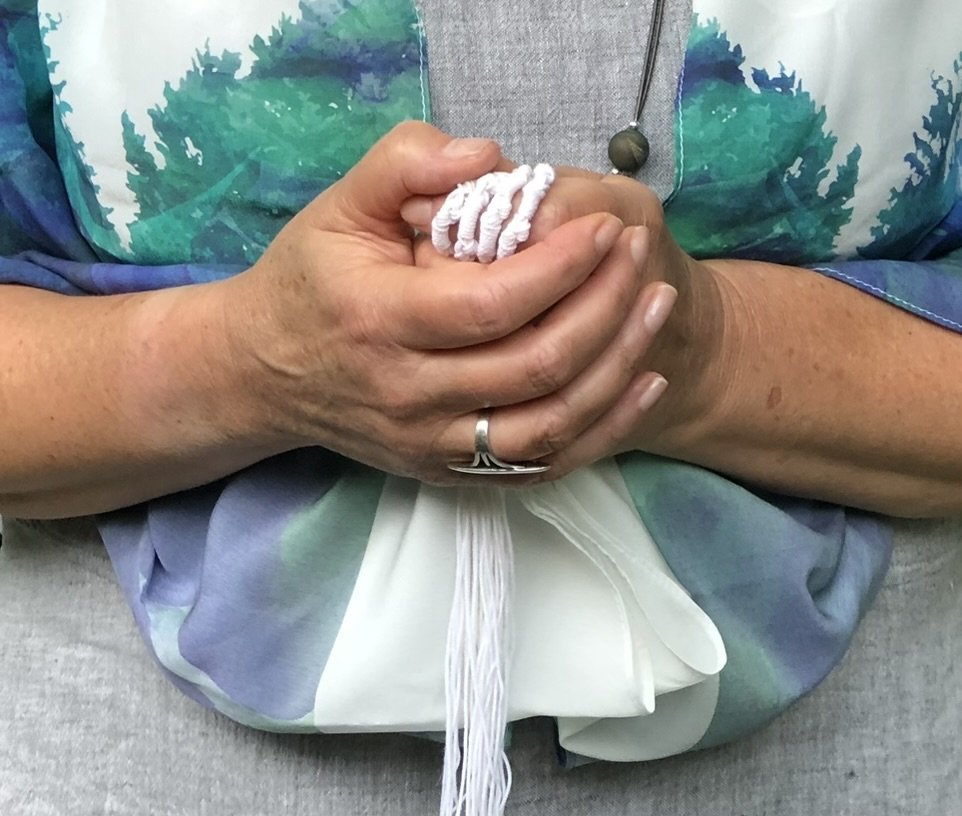
I chose to name my sacred work Holding the Fringes for two intertwined reasons.
First, I am devoted to those who find themselves at the “fringes” of Jewish life — spiritually curious, intellectually engaged, sometimes wounded by institutional experiences, yet still yearning for connection.
Second, the fringes evoke the tzitzit of the tallit, the ritual threads gathered during prayer. When we hold those fringes, we symbolically draw together the four corners of the earth — disparate experiences united in our hands. This ancient ritual technology connects us to ancestors, descendants, memory, and possibility.
Jewish wisdom provides tools to:
Define and focus sacred time and space
Weave deep connections
Activate memory and vision
Cultivate celebration and wellbeing
Helping others access these tools — skeptics and believers alike — is among my greatest joys.
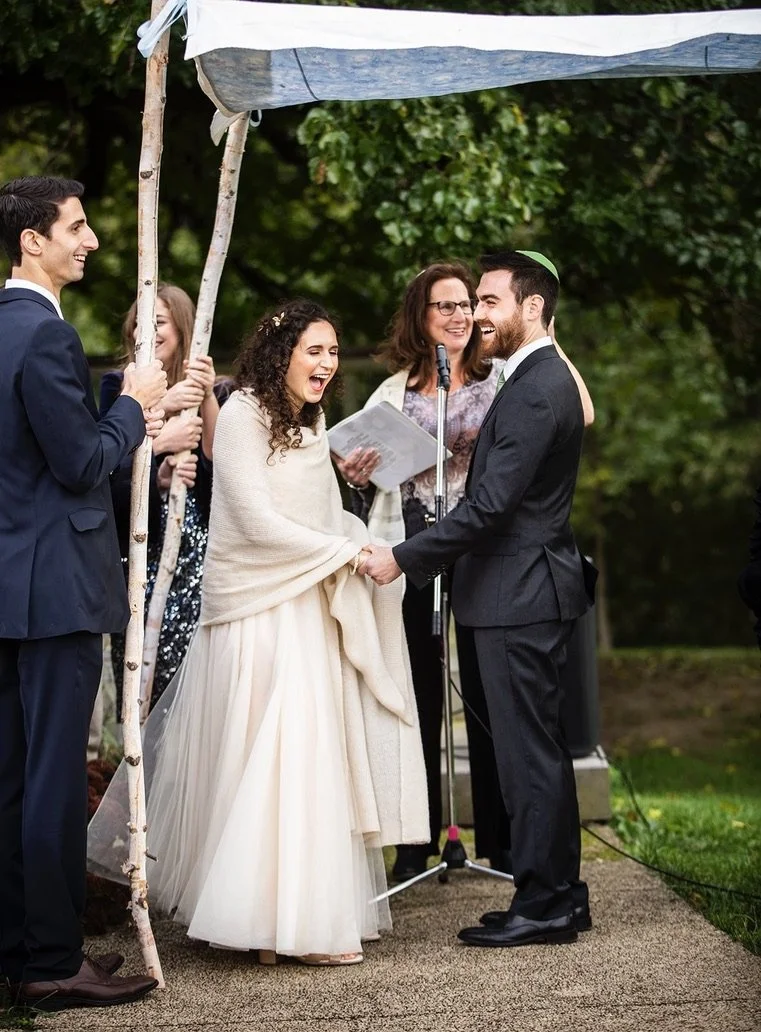
“In planning a Jewish wedding, finding the right rabbi is of the utmost importance! As progressive Jews who find ourselves living in the South, it was essential that we found and connected with someone to guide us with whom we felt shared Jewish, universal, and contemporary values. Rabbi Shimberg is a universal blessing for anyone who feels it is important to be Jewish, and to continue to critically analyze Judaism’s traditions and relevance, and the way that Jewish culture and practice enhance our lives. Judaism, in its best form, exists in harmony with modern ideals and with visions of an equitable future for every soul that walks this earth. Rabbi Shimberg embodies this in a manner that is inspirational and worthy of reverence. Her guidance is deeply rooted in her commitment to social equality, environmental sensitivity and activism, and altruistic inclusiveness.
All are welcome under her roof. Her generosity and commitment to her work gave us reassurance throughout the process of developing our wedding ceremony and navigating the participation of our family and friends.
Rabbi Jessica’s attention to detail set us at ease, because it was clear that she was just as invested in our process as we were. Her thoughtful attention to verbiage and our sensibilities was very helpful in choosing the language for our ceremony and ketubah that is most reflective of our perspective. We cannot sing her praises enough because she truly is the genuine article!
If you find yourself in a similar position to ours, we urge you to reach out to her. Knowing that there are rabbis like her, especially in this region, is such a refreshing discovery. We are so thankful that we found Rabbi Jessica and appreciate that our relationship with her is still growing. Her guidance continues to provide clarity and security in our relationship, and our gratitude is unending.”
— Max & Kate